
In one sentence
Varmo uses a ceramic plate that heats in seconds, a quiet fan to spread the warmth, and a thermostat that switches off once your room is warm.
See Varmo prices- Free tracked UK deliveryDispatched from our UK team
- Money-back guaranteeTry it on your own meter
- Secure checkoutEncrypted, powered by Shopify
- CE & UKCA markedOverheat cut-out built in
From cold to cosy in 4 steps
 1
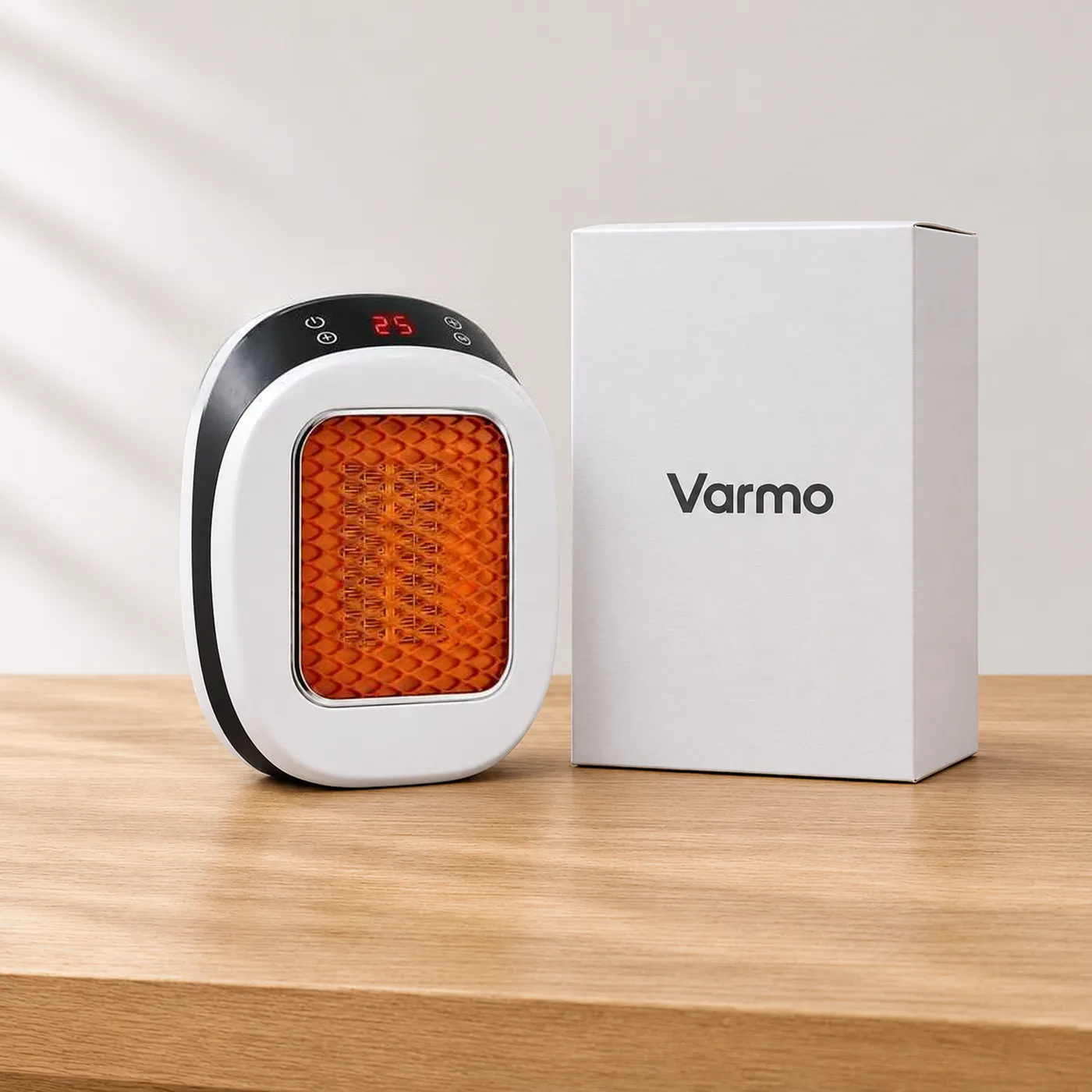
Plug in
Push Varmo into any UK wall socket. The plug rotates 270° to fit upright or sideways sockets. No fitting, no cable.
 2
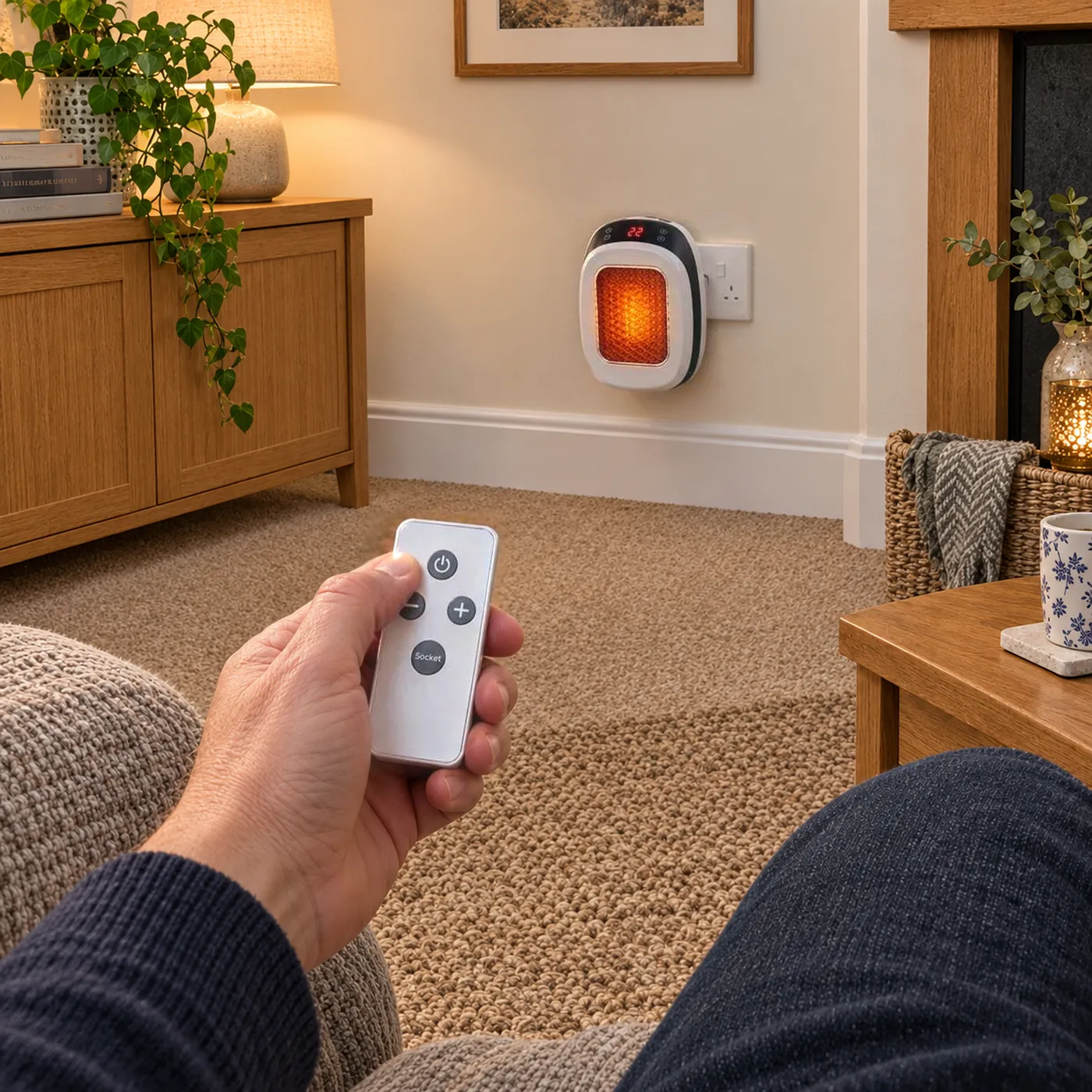
Set your temperature
Choose anywhere from 15 to 32°C on the touch panel or the remote, from your chair.
 3
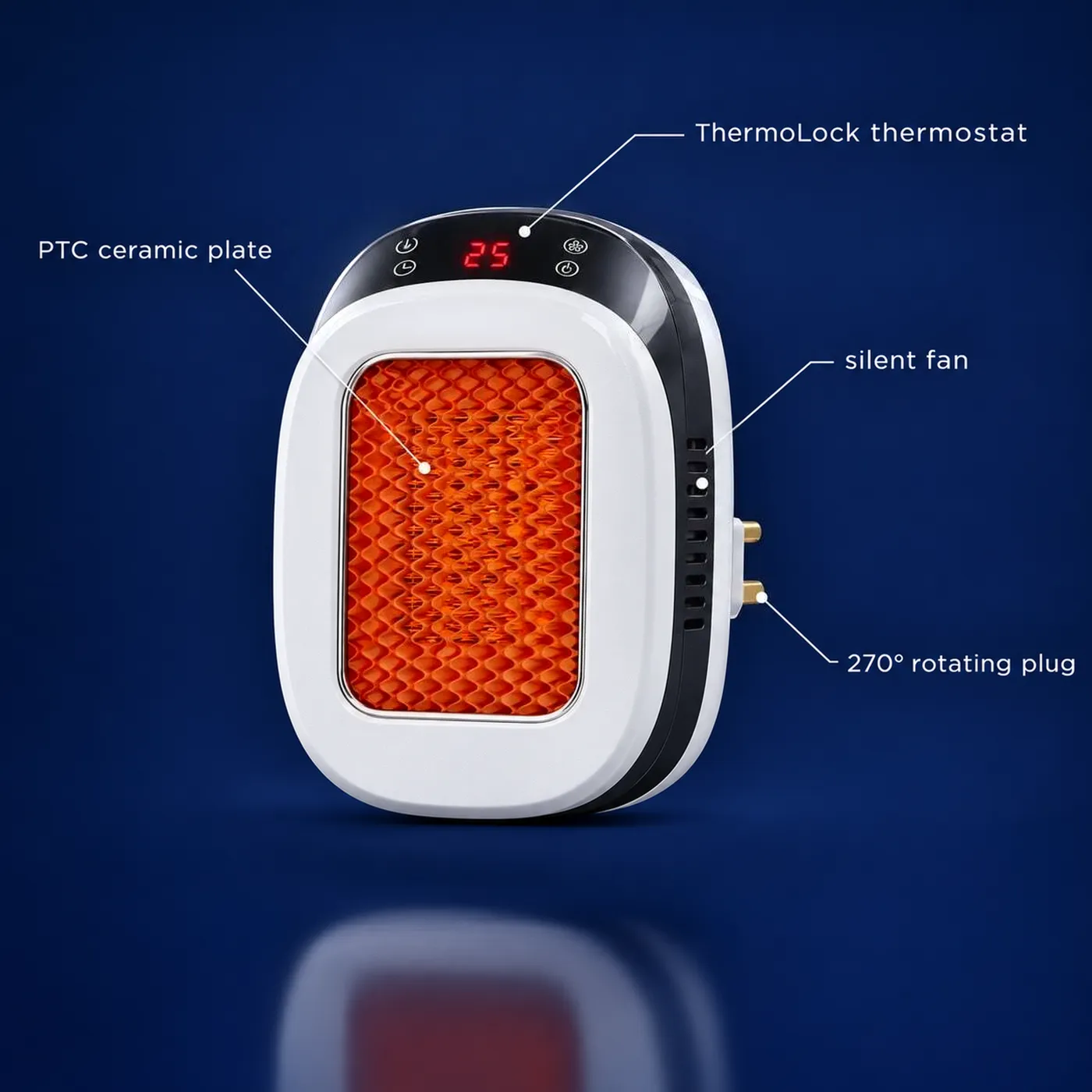
Ceramic plate heats, fan spreads warmth
The PTC ceramic plate reaches full heat in about 8 seconds and the quiet fan moves warm air around the room.
 4
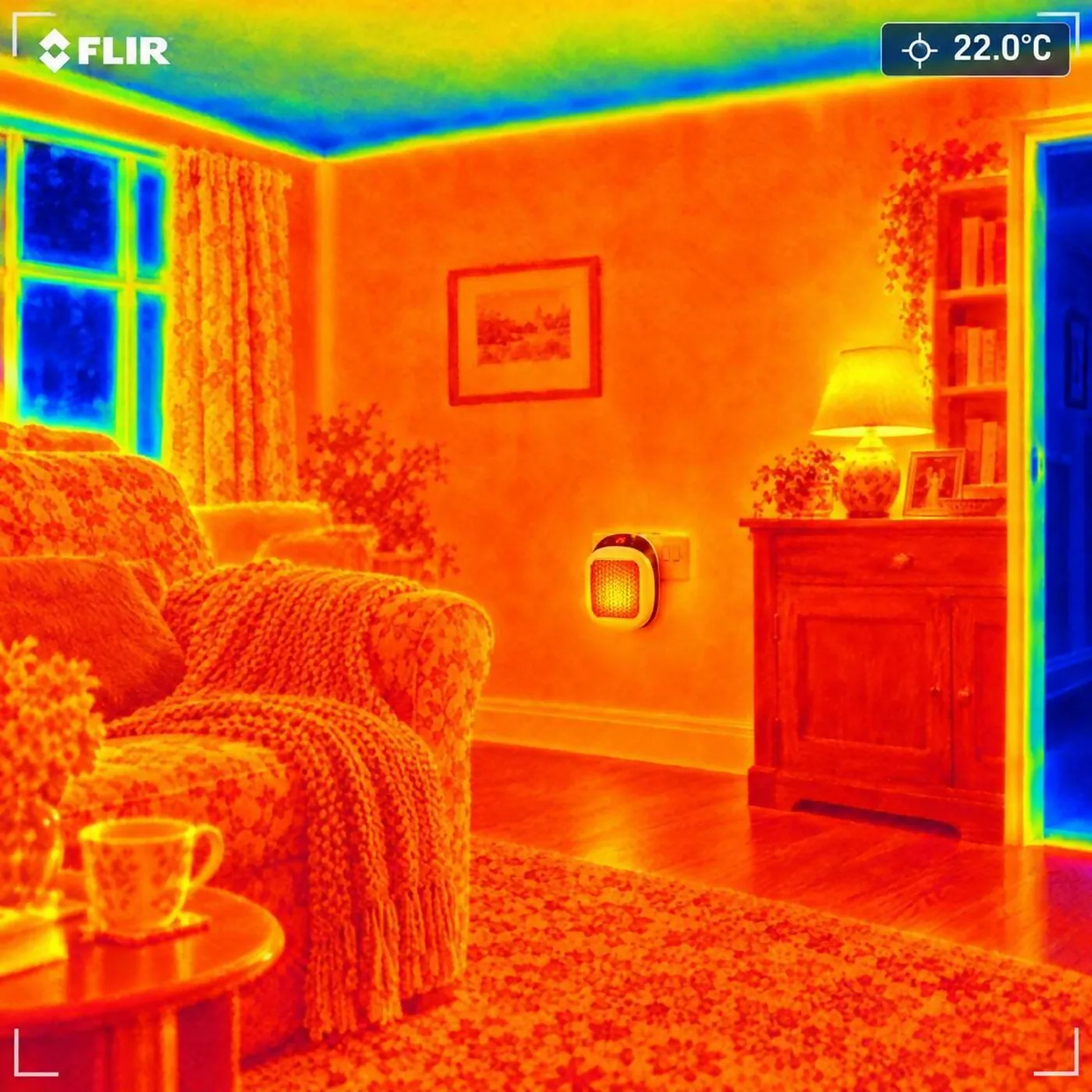
Thermostat holds your temperature
Once the room reaches your setting, ThermoLock switches the heat off and back on only when the room cools.
What each part does
What is a PTC ceramic heater?
PTC stands for "positive temperature coefficient". In plain words: the ceramic element lets less electricity through as it gets hotter. So it warms up very quickly, then limits its own temperature instead of getting hotter and hotter.
That gives you fast heat without glowing bars or exposed coils. A small fan blows air across the warm ceramic and out into the room, so the warmth reaches you rather than staying around the heater.
How the thermostat saves money
Varmo only uses power while it is heating. Once your room reaches the temperature you chose, ThermoLock switches the heat off, then on again for short spells when the room cools.
Illustration only. How often it switches on depends on your room, insulation and the weather outside.
The controls
Touch panel
Clear buttons and an LED display on the front.
Remote control
Change the temperature or timer without getting up.
15–32°C thermostat
Pick the exact temperature. Most people like 18–21°C.
6–12 hour timer
Switches itself off, so it never runs longer than you need.
Built-in safety
Overheat cut-out
Switches off automatically if it gets too hot.
Cool-touch casing
The outside stays safe to touch.
Plugs into the wall
No trailing cable to trip over or knock.
CE and UKCA marked
Meets the rules for selling heaters in Great Britain.
Read the full Varmo safety guide →
What it costs to run
Cost = power (kW) × hours × unit rate. Varmo is 0.6 kW. At the Ofgem price cap of 26.32p per kWh:
- One hour at full power: about 15.8p
- Five hours at full power: no more than about 79p
- Less once the thermostat starts switching off
See the full running cost guide and calculator →
Get the best from Varmo
- Close the door so the warmth stays in the room
- Draw the curtains once it gets dark
- Keep a clear metre around it: no curtains, bedding or furniture
- Plug straight into a wall socket, never an extension lead
- Use the timer so it switches off by itself
How does a PTC ceramic heater work?
Electricity passes through a ceramic element whose resistance rises as it gets hotter. That means it heats quickly, then limits its own temperature, without glowing bars. A fan blows air over it to warm the room.
How quickly does Varmo warm a room?
The ceramic plate reaches full heat in about 8 seconds. A normal-sized room with the door closed typically feels cosy in 10–15 minutes.
How much does Varmo cost to run?
Varmo draws 600 W, so at the Ofgem price cap of 26.32p per kWh it costs about 15.8p an hour at full power, and no more than about 79p for 5 hours. It costs less once the thermostat starts switching off.
Does a ceramic heater use electricity more efficiently?
For direct electric room heating, almost all the electricity becomes heat where the appliance is used. That is broadly true of ceramic fan heaters, convectors and oil-filled radiators. Ceramic describes the heating element; it does not create extra energy or overturn this basic comparison.
Varmo can use less electricity per hour at full power than a 2 kW heater because it supplies less heat per hour. The potential saving comes from heating the room you occupy, choosing a suitable target and avoiding unnecessary running. It is not a guaranteed saving for delivering identical warmth in identical conditions. Heat pumps are a different technology because they move heat rather than simply converting electricity into heat. They should not be grouped with resistance heaters under the same efficiency claim.
How often will the thermostat switch the heat on?
There is no single honest answer for every home. On a mild evening in a sheltered room, the heating element may spend more time off. On a cold day in a draughty room, it may stay on for much longer. If the room never reaches the target, it may continue to call for heat.
Earlier short descriptions of ten minutes per hour and a 30–45p evening are not measured predictions for your household. They should not be used as a budget guarantee. The thermostat controls heating in response to temperature, rather than imposing a fixed monthly bill. Small control or fan consumption during non-heating periods is not separately quantified here, so we do not promise literally zero electricity use whenever the heating element pauses.
Will heating one room lower my whole energy bill?
It may, if it replaces enough other heating use rather than simply being added on top. If you leave the main heating unchanged and add an electric heater, total energy spending can rise. Gas and electricity have different unit prices, so a wattage comparison alone cannot decide which routine costs less.
Look at the rooms that still need warmth, including those used by other people. Protect against damp, excessive cold and frozen pipes, and follow any health advice relevant to your household. Central heating is not always an all-or-nothing system: suitable radiator valves and controls can already reduce heat in unused rooms. Compare Varmo with the controls you actually have, not an assumption that every radiator must be fully on whenever the boiler runs.
More questions answered
Sources
Facts on this page were checked against these independent sources. Energy prices use the Ofgem price cap for 1 October to 31 December 2026.
Varmo prices
Get your Varmo
Launch price: half off. Buy more and pay less per heater.
You'll pay £99.00 today · Free tracked UK delivery · No subscription
Secure checkout by Shopify
- Free tracked UK delivery
- Money-back guarantee
- Secure Shopify checkout