
Cost per hour at full power (26p/kWh)
- Low-wattage plug-in heater (600 W): about 16p
- Halogen heater (1,200 W): about 31p
- Oil-filled radiator (1,500–2,500 W): about 39–65p
- Fan heater (2,000 W): about 52p
- Convector / panel heater (2,000 W): about 52p
Why low wattage wins for one room
A smaller heater with a thermostat reaches your temperature and then idles. A big heater may warm faster but burns far more power while it runs.
The cheapest option for most homes
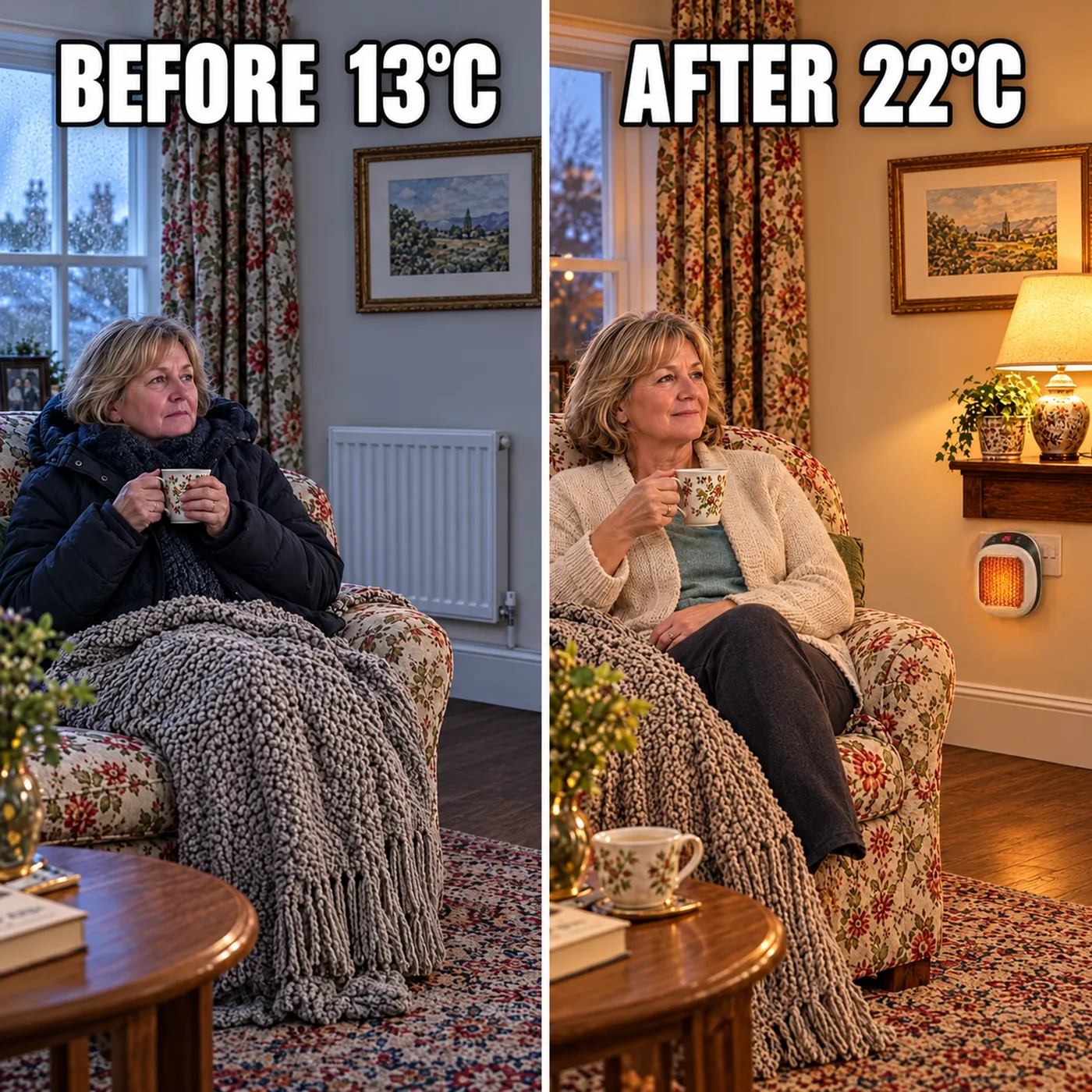
Heat the room you use with a low-wattage thermostat heater and turn the central heating down. Varmo is designed exactly for that.
Running cost calculator
| Per day | Per week | Winter (26 wks) | |
|---|---|---|---|
| Varmo 600 W* | £0.26 | £1.82 | £47.32 |
| 2,000 W fan heater | £2.60 | £18.20 | £473.20 |
*Estimate: one hour at full power to warm the room, then ThermoLock topping up about 10 minutes an hour. Real costs depend on room size, insulation and outside temperature.
Get Varmo for £59What does cheapest to run actually mean?
There are several different questions hidden in that phrase. You might mean the lowest cost per hour, the lowest cost for a warm evening or the lowest total cost over a winter. Those are not interchangeable. A very small heater can have the lowest hourly draw yet fail to make the room comfortable.
Start by defining the job. Is it extra warmth in a study, heating a cold bedroom before use or maintaining the main living room all day? Then compare products that can reasonably do that job. Include their controls and the room's likely heat loss. The cheapest suitable appliance may not be the lowest-wattage one. Varmo can be a sensible option where 600 W is enough for one normal room, but the label alone cannot establish that it is the cheapest way to deliver your required comfort.
Can a bigger heater cost the same as a smaller one?
Yes. A larger heater can use the same energy if it runs for a shorter time. The table illustrates equal electrical input across different combinations of wattage and hours. This is why comparing five hours of continuous low-power heating with five hours of continuous high-power heating does not prove which is cheaper at maintaining the same room temperature.
The real outcome depends on how each heater is controlled and how heat is distributed. A higher-powered heater may bring a cold room up to temperature faster and then cycle off. A smaller one may run continuously. Either could be useful in the right setting. Do not assume that a larger appliance must use its maximum rating throughout the session, or that a smaller one will always reach its thermostat setting. Both assumptions can make a cost comparison look more decisive than the evidence supports.
Are fan, oil-filled and panel heaters different in running cost?
At the same electrical input and operating time, ordinary direct electric heaters cost essentially the same to run on the same tariff. An oil-filled radiator does not gain free energy from retaining warmth. A fan heater does not waste most of its electricity because it moves air. Their practical strengths differ, but their basic conversion of electricity into indoor heat is similar.
Choose features that fit the task. A fan heater can provide a quick response. An oil-filled radiator offers a different pattern of heat release without a fan. A panel heater may suit a fixed position and regular schedule. A radiant heater can make a person feel warm without heating all the air equally, although positioning and fire clearances matter. Compare the actual model's power settings and thermostat rather than treating a whole heater category as automatically the cheapest.
Is gas central heating cheaper than an electric room heater?
The supplied gas benchmark is 7.97p/kWh, compared with 26.32p/kWh for electricity. That makes gas cheaper per unit of purchased energy in this comparison. A boiler has losses, however, and central heating may warm more space than you currently need. The correct comparison depends on the boiler, controls and rooms being heated.
Avoid comparing 600 W of electric input directly with a boiler's maximum rating. A boiler does not necessarily run at that rating throughout the evening. Equally, heating several unused rooms can be unnecessary. If you have good zoning or radiator controls, your existing heating may already provide economical room warmth. A portable heater is most likely to help where it allows some other heating demand to be genuinely avoided. It is not automatically cheaper simply because it serves one room or has a lower number on its label.
Should I include the purchase price in the comparison?
Yes, especially for occasional use. An appliance that is already owned and suitable has no new purchase cost. A new heater needs to save enough during use to justify its price, unless you are buying it for another clear benefit such as safer positioning or easier controls. Do not discard a suitable working heater solely because a newer one has energy-saving wording.
One Varmo costs £59. If a new routine genuinely saved 20p per day, recovering £59 would take 295 days of that use. This is an illustration of payback arithmetic, not a prediction that Varmo saves 20p daily. If savings only occur during a short heating season, payback can span several years. Multipack discounts lower the price per unit, but buying unnecessary units increases your overall outlay. Decide how many rooms and users actually need a separate appliance before looking at bundle prices.
How do I find the cheapest suitable option for my home?
First check your tariff and existing heating controls. Then identify why the room feels cold: insufficient heating, unwanted draughts, an unsuitable schedule or poor heat distribution. Fixing a control setting may cost nothing. Dealing with unwanted draughts can make whichever heater you choose more effective, while necessary ventilation must remain open.
Shortlist appliances that can safely fit the room and meet the heating need. Compare purchase price, control quality, usable power settings and likely operating hours. Where possible, assess actual electricity consumption over several representative sessions rather than relying on a claimed cycling pattern. Keep a note of comfort too. If the cheapest-looking option leaves you cold and leads you to switch on another heater, its low hourly figure has not delivered the lowest useful cost. Choose sufficient, controllable warmth rather than the smallest number in isolation.
| Power and time | Energy used | Cost at 26.32p/kWh |
|---|---|---|
| 600 W for 5 hours | 3 kWh | £0.79 |
| 1 kW for 3 hours | 3 kWh | £0.79 |
| 2 kW for 1.5 hours | 3 kWh | £0.79 |
| 3 kW for 1 hour | 3 kWh | £0.79 |
Who it is not for
We'd rather you buy the right heater than return the wrong one. Varmo is probably not for you if:
- You need a guaranteed lowest bill without checking your tariff and room conditions.
- You are comparing whole-home heating with one room without accounting for the different service.
- You need a small heater to maintain a large open-plan space.
How we worked this out
Cost equals power in kW multiplied by operating hours and the electricity unit rate. The examples use the supplied Ofgem Direct Debit benchmark of 26.32p/kWh for 1 October–31 December 2026. Check the linked Ofgem page and your own tariff before use.
Full-power examples assume continuous rated input. Thermostat cycling is not assumed. The daily electricity standing charge of 54.83p is excluded because an additional heater does not normally create another standing charge.
The supplied October–December 2026 rate is used as given, without adding VAT. The supplied VAT treatment covers October 2026–March 2027; the same unit rate must not be assumed for that whole period.
More questions answered
Sources
Facts on this page were checked against these independent sources. Energy prices use the Ofgem price cap for 1 October to 31 December 2026.
Ready to warm the room you actually use? See Varmo bundle prices.
Get your Varmo
Launch price: half off. Buy more and pay less per heater.
You'll pay £99.00 today · Free tracked UK delivery · No subscription
Secure checkout by Shopify
- Free tracked UK delivery
- Money-back guarantee
- Secure Shopify checkout