
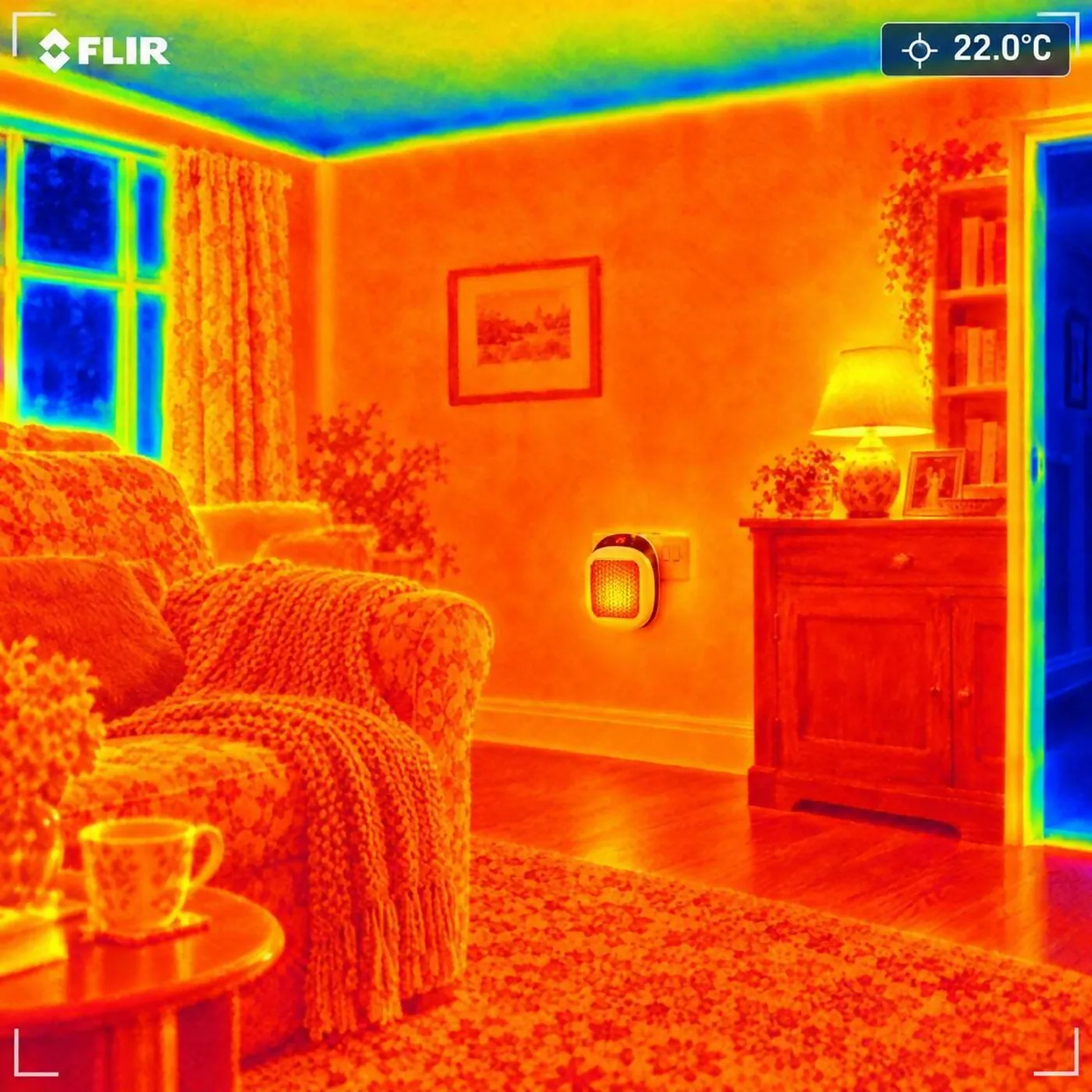
The truth about 'energy-saving' heaters
Quick answer
A 2 kW heater and a 600 W heater both turn almost all their electricity into heat. What saves money is using less power, for less time, in fewer rooms.
Three things that genuinely cut costs
- Low wattage: less power per hour
- A precise thermostat: it stops drawing power once the room is warm
- Zoned heating: warm the room you're in and turn the central heating down
Which heater is best for energy saving?
For one room, a low-wattage ceramic heater with a digital thermostat and timer. Varmo is 600 W, holds your chosen temperature and switches off once the room is warm.
Frequently asked questions
Can a heater be energy-saving without being more efficient?
Yes, but the wording needs care. A heater may help you use less energy by warming a smaller area, avoiding overheating or stopping when warmth is no longer needed. That does not mean its heating element converts electricity into heat more efficiently than another ordinary electric heater. The saving comes from changing the heating task or controlling it better.
Think of a spare room that does not need heating all afternoon. Avoiding unnecessary heating there can reduce energy use, provided the rest of the home remains adequately warm. By contrast, replacing one electric heater with another while demanding the same room temperature for the same period may produce little change. A low power rating limits hourly input, but also limits heat output. The honest question is whether the appliance provides enough useful warmth with less total energy in your particular routine.
How can I tell whether a saving claim is realistic?
Ask what the comparison includes. A claim based on a 600 W heater and a 3 kW heater running continuously for equal periods compares power draw, not necessarily equivalent comfort. The larger heater might switch off sooner. Equally, the smaller heater might be sufficient for the task. Neither outcome can be known from the labels alone.
Be cautious if a claim leaves out room conditions, operating hours or the previous heating arrangement. Avoid relying on statements that a thermostat will run for a fixed number of minutes each hour. The earlier ten-minute figure on this page should not be treated as a measured Varmo result or a promise for your room. A thermostat responds to conditions. During cold weather it may call for heat much more often, including continuously if the heater cannot reach the target. There is no guaranteed saving attached to owning a thermostat.
Should I turn down central heating when using a room heater?
If a portable heater is simply added to an already heated room, it is another energy cost. To reduce the total bill, you normally need to avoid some other heating or reduce the amount of space being warmed. Whether that works depends on your controls, the household's routine and how the building responds.
Do not turn the whole home down without considering other people, pets, damp-prone rooms and any frost-protection needs. A thermostat in one room may control the boiler for the whole house. Heating that room separately could stop the boiler calling for heat elsewhere. Learn how your particular system works before changing the routine. A room heater is most likely to help when one occupied room needs extra warmth for a limited time, while the remaining rooms can safely need less. It is not automatically cheaper than a well-controlled central heating system.
What is the difference between an electric heater and a heat pump?
A direct electric heater turns electrical energy into heat at the point of use. A heat pump uses electricity to move heat from outside into the home. Under suitable conditions, a heat pump can deliver more heat than the electrical energy it consumes. That is why a claim that all electric heating has identical efficiency needs this important exception.
Heat pumps are generally a whole-system decision involving the building, installation and heating design. They are not interchangeable with a small plug-in heater bought for occasional room use. Storage heaters are another separate case: they store heat bought during particular tariff periods, so the timing and electricity rate matter. When comparing options, keep the scope clear. Varmo may suit supplementary heating in one normal room, but it should not be presented as a more efficient substitute for a correctly designed heat pump or as a universal replacement for installed heating.
What can I improve before buying another heater?
Check for unwanted draughts around windows and external doors. Close internal doors when you want to keep warmth in one room, provided this does not interfere with a ventilation arrangement. Use curtains sensibly, keeping them clear of heaters. These steps can make existing heat more useful without changing the appliance producing it.
Do not confuse draught-proofing with sealing the home completely. Airbricks, extractor fans and other planned ventilation have a purpose. Blocking them can cause poor air quality or moisture problems. Also check the heating controls you already own. A schedule that heats empty rooms or runs long after bedtime may offer a simpler improvement than another purchase. If the home cannot stay adequately warm, seek advice about the building and existing system. A small portable heater is not a repair for failed heating, poor insulation or a persistent damp problem.
How do I check whether my new heating routine is working?
Keep a simple record for several comparable days. Note the rooms used, approximate outdoor conditions, heating hours and whether anyone felt cold. Record electricity and gas use where available. A smart meter can show changes, but whole-home readings also include cooking, hot water and other appliances. One low-use evening does not establish a typical winter saving.
Compare energy in kWh before comparing pounds, especially if your tariff has changed. Then apply the correct unit rates for the period. Include the purchase price when deciding whether a new heater is worthwhile. Varmo costs £59 for one unit, so even a genuine running-cost reduction needs time to recover that expense. If comfort worsens or the rest of the home becomes too cold, revise the plan. A useful energy-saving routine should reduce avoidable waste, not leave people enduring unsuitable temperatures.
| Action | Why it can help | Important limit |
|---|---|---|
| Reduce unwanted draughts | Less warm air escapes | Keep required ventilation open |
| Avoid overheating | A smaller temperature difference reduces heat loss | Maintain adequate warmth |
| Heat occupied space | Less unused space needs warming | Protect other rooms from excessive cold |
| Use suitable controls | Heat is supplied when needed | Controls cannot overcome insufficient output |
Who it is not for
We'd rather you buy the right heater than return the wrong one. Varmo is probably not for you if:
- You expect ceramic technology to create more heat per unit than other direct electric heaters.
- Your household needs several rooms warm at the same time.
- You plan to add a heater while leaving all existing heating unchanged.
How we worked this out
Judge savings using total household energy use, not the portable heater's wattage alone. Compare similar periods and account for outdoor weather, occupancy and changes in other appliances.
No fixed thermostat duty cycle or percentage saving is assumed. Actual demand depends on the room's heat loss and chosen temperature.
More questions answered
Sources
Facts on this page were checked against these independent sources. Energy prices use the Ofgem price cap for 1 October to 31 December 2026.
Ready to warm the room you actually use? See Varmo bundle prices.
Get your Varmo
Launch price: half off. Buy more and pay less per heater.
You'll pay £99.00 today · Free tracked UK delivery · No subscription
Secure checkout by Shopify
- Free tracked UK delivery
- Money-back guarantee
- Secure Shopify checkout