
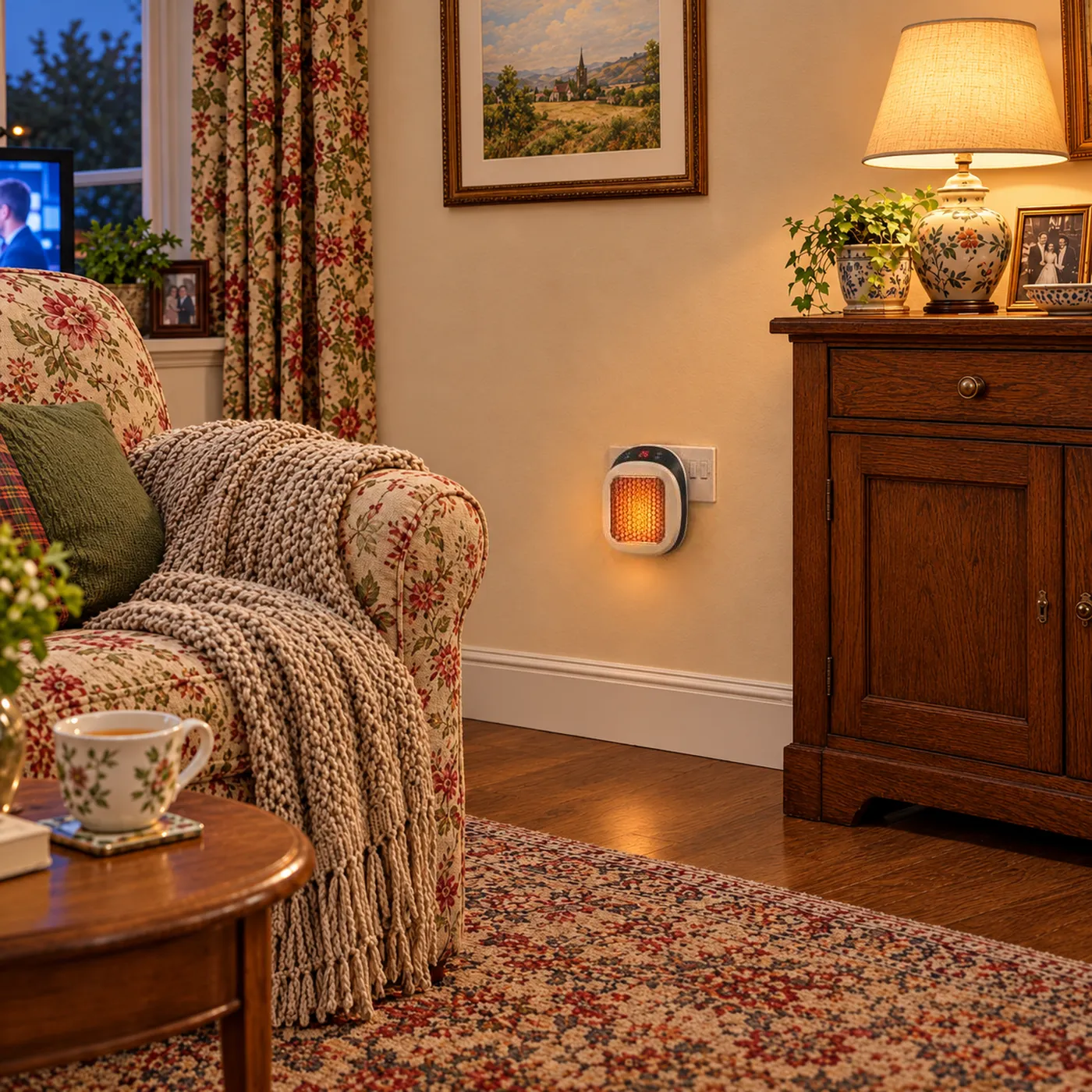
What makes a good bedroom heater
- Quiet fan (quieter than a fridge)
- Auto-off timer
- Thermostat to avoid overheating the room
- Overheat cut-out
- No cables to trip on in the dark
Why not an oil radiator?
Oil radiators are quiet but slow, bulky and usually draw 1,500 W or more.
Our recommendation
Varmo is quiet, has a 6–12 hour timer, holds an exact temperature and plugs into the wall, so there's nothing on the floor.
Should I warm my bedroom before bed rather than leave a heater on?
For a portable room heater, warming the bedroom while you are awake is the safer starting point. Allow time to check the appliance, the socket and the surrounding space. Switch it off before sleeping and follow its instructions. Electrical Safety First advises against leaving portable heaters unattended or using them while asleep.
An automatic cut-out or timer does not remove the need for supervision. A duvet can fall, a curtain can move and an air inlet can become blocked. These risks still matter when the heater has several safety features.
If you need dependable warmth through the night, especially because of age or a health condition, consider properly controlled fixed heating. Do not choose between an unsafe heater arrangement and an unhealthily cold bedroom. Ask for help with heating provision or bills if necessary.
How can I tell whether a small heater will warm my bedroom?
Start with the room rather than the product label. A bedroom with a high ceiling, outside walls and draughty windows can need more heat than a similar-sized room surrounded by other heated rooms. The starting temperature and the weather outside also matter.
Varmo is specified for one normal room, with room warming in around 10–15 minutes under suitable conditions. Treat that as an indicative claim, not a promise for every bedroom. Its ceramic plate reaching full heat in about eight seconds does not mean the walls, bedding and air warm that quickly.
Use a separate room thermometer away from the heater, direct sun and windows. If the bedroom remains cold with the heater working continuously, a higher thermostat setting will not create more than its available 600 W output. Improve heat retention or reconsider the heating arrangement.
Where is the safest socket for a bedroom plug-in heater?
Look for a sound wall socket with open space around it. The heater must not sit behind a headboard, beneath hanging bedding or against a chest of drawers. Check the manufacturer's clearances before buying, rather than assuming a small appliance needs very little space.
Varmo has a UK three-pin plug that rotates through 270°. This may help it fit an appropriate socket, but it does not make a poor location safe. Follow the instructions for the correct operating position. Never use rotation as a way to direct hot air into a cramped gap.
Plug the heater directly into the wall, not an extension lead or multiway adaptor. Keep the route to the bed clear. If the socket is loose, damaged or discoloured, do not use it; have it checked by a qualified electrician.
Is a fanless heater better if I am a light sleeper?
A fanless oil-filled radiator may suit someone who dislikes moving air or fan noise. It can still make occasional expansion noises or thermostat clicks. No heater should be described as completely inaudible without evidence covering the conditions in which it will be used.
Varmo is described as having a silent fan, but that description is not an independent noise test. There is no measured decibel figure in this guide. If sound is your main concern, ask what information is available and check the return terms before ordering.
Also think about light. An LED display that seems unobtrusive during the day can be noticeable in a dark bedroom. Do not cover the display or appliance with fabric to block it. Pre-warming and switching off before bed avoids both ongoing fan sound and operating light.
What temperature should an older person's bedroom be?
UKHSA guidance recommends heating rooms you use to at least 18°C. This is particularly important for older people, those with limited mobility and people with long-term health conditions. A warmer setting may be needed for individual comfort or medical circumstances.
A thermostat on the appliance measures conditions near its sensor, not necessarily beside the bed. Check the temperature where the person spends time. Do not assume that setting a heater to 18°C guarantees a minimum of 18°C throughout the room.
If switching a portable heater off leaves the bedroom too cold overnight, arrange a suitable fixed-heating solution or seek practical support. Extra bedding can improve comfort, but it should not be used to dismiss a persistently cold room. Discuss individual concerns with a health professional rather than relying on a product recommendation.
Can a bedroom heater cause condensation or dry the air?
An electric heater does not add water vapour through combustion. However, moisture from breathing, drying laundry and other household activities can still collect on cold bedroom surfaces. Heating only the air for a short spell will not necessarily warm a cold outside wall enough to prevent condensation.
Keep intended ventilation working and deal with obvious leaks or damp. Do not block air bricks or trickle vents simply to make a heater seem more effective. Where condensation persists, tackle its cause rather than buying a more powerful appliance without further checks.
Warm air can feel dry, and a fan blowing directly towards your face may be uncomfortable. Position the heater safely rather than close to the pillow. Never place a bowl of water on or beside an electrical heater as a homemade humidifier.
What should I check before buying a bedroom heater?
Write down the socket location, the available clearances and when you want warmth. A heater for dressing in the morning has a different job from a system maintaining a bedroom temperature overnight. This simple check can prevent buying an appliance that cannot safely meet the need.
Compare purchase price, controls, usable output and return terms. Varmo costs £59 for one unit. Its touch panel, LED display and remote may be useful, but only if the intended user can read and operate them comfortably. A cool-touch casing and overheat cut-out do not make the outlet or airflow harmless.
Varmo is CE and UKCA marked. Those marks are not a substitute for careful placement or proof of a specific bedroom noise level. Keep the instructions, check the guarantee conditions and choose a different heating option if the room or socket layout is unsuitable.
Pros and cons
Good points
- Varmo leaves floor space clear when a suitable, unobstructed wall socket is available.
- Its remote allows adjustments without repeatedly reaching down to the socket.
- The 15–32°C ThermoLock thermostat allows a lower temperature setting than simply running continuously.
Things to know
- Socket position may put the heater too close to bedding, curtains or furniture.
- There are no independent sound measurements here to support a comparison with a fridge or another heater.
- A cold, draughty bedroom may lose heat faster than a 600 W heater can replace it.
Who it is not for
We'd rather you buy the right heater than return the wrong one. Varmo is probably not for you if:
- You want a portable heater to run unattended throughout the night.
- Your only socket is behind a bed, wardrobe or curtain.
- You need to warm several connected rooms from one appliance.
More questions answered
Sources
Facts on this page were checked against these independent sources. Energy prices use the Ofgem price cap for 1 October to 31 December 2026.
Ready to warm the room you actually use? See Varmo bundle prices.
Get your Varmo
Launch price: half off. Buy more and pay less per heater.
You'll pay £99.00 today · Free tracked UK delivery · No subscription
Secure checkout by Shopify
- Free tracked UK delivery
- Money-back guarantee
- Secure Shopify checkout