
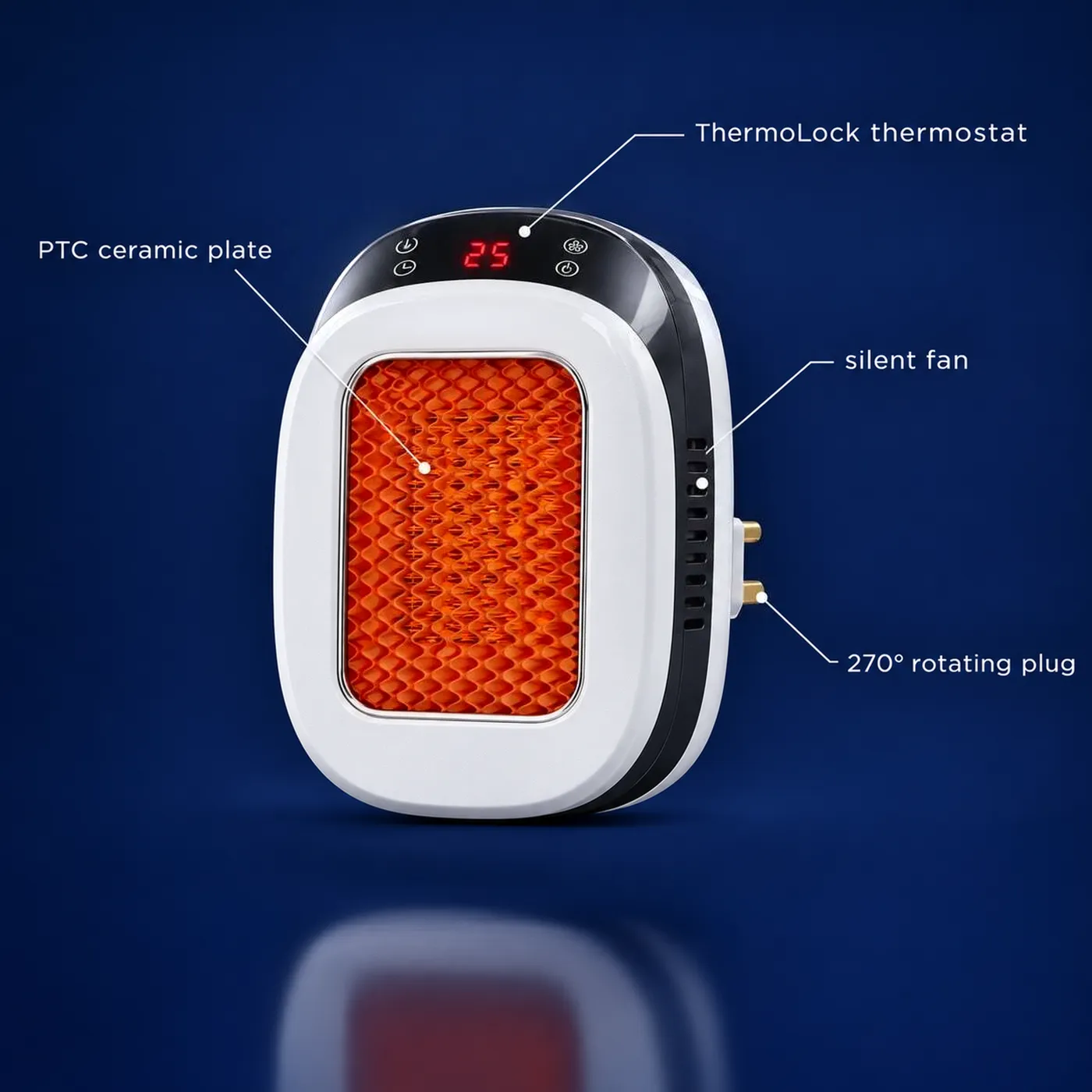
Safety features to look for
- UKCA or CE marking
- Overheat cut-out
- Self-regulating PTC ceramic element
- Cool-touch casing
- Auto-off timer
Is it safe to plug a heater into a wall socket?
Yes, if it's within the socket's 13 A rating. A 600 W heater draws about 2.5 A. Avoid extension leads and adaptors for any heater.
Can you leave a plug-in heater on overnight?
It's safest not to. Warm the room before bed and switch the heater off. Overheat protection and a timer are back-ups, not a replacement for being awake and nearby.
Safe-use checklist
- Keep 1 m clear in front
- Never cover it
- Don't use in bathrooms unless rated for it
- Unplug when going out
Frequently asked questions
Can a low-power heater still overheat a socket?
Yes. Electrical input is only one part of socket safety. A worn contact, loose connection or damaged accessory can develop a local hot spot even when the appliance draws less than the socket's nominal rating. A 600 W heater draws roughly 2.6 A at 230 V, but that figure does not certify the condition of the socket or wiring.
The earlier suggestion that a correctly rated heater cannot overheat a socket needs this qualification. Before use, look for cracks, discolouration, looseness and signs of previous heat damage. The plug should fit securely without the appliance wobbling or pulling away. Do not hold it in place with tape or another object. If there is unusual warmth, buzzing, crackling or a burning smell, stop using that socket. Have a competent electrician assess a suspected electrical fault rather than moving the same appliance between damaged sockets.
Is it safe to leave a plug-in heater on while sleeping?
Do not leave a portable heater running while asleep. Warm the room while you are awake and present, then switch it off before bed. An overheat cut-out is a backup protection, not an observer. A timer may eventually stop the appliance, but it cannot notice bedding falling into the airflow or a developing socket problem.
This is more cautious than the earlier overnight wording on this page, which should not be read as permission based on a timer alone. If someone needs steady warmth overnight, review suitable fixed heating and its controls rather than relying on a portable appliance beside the bed. Keep a clear exit route and working smoke alarms. For someone who may struggle to respond to an alarm or operate controls, seek a broader household safety plan. A small heater's convenience should never be mistaken for an unattended heating solution.
How far should furniture and fabrics be from the heater?
Follow the exact clearances in the appliance's instructions. The one-metre front clearance mentioned earlier is not a substitute for checking every side, including above and behind where relevant. A heater can draw material towards an inlet or direct hot airflow onto something that was not touching it. Curtains, loose papers, bedding and laundry all need attention.
Inspect the space as it will be used, not only while it is tidy. A blanket may slip from a chair, a door may move a curtain and a pet may drag bedding across the floor. Never use the appliance to dry clothing, and never cover it to soften its light or reduce airflow. If the available socket cannot provide safe space, do not compromise the clearances. Choose a different heating arrangement that fits the room. Compact dimensions do not reduce the need to manage nearby combustible materials.
Do CE and UKCA marks mean a heater has been independently tested?
Do not assume that a mark means an independent organisation has tested every individual appliance. CE and UKCA markings relate to conformity with applicable requirements. They are not customer ratings, proof of a particular lifespan or a guarantee that no fault can occur. A logo alone should not be your entire buying check.
Look for clear product identification, electrical details, instructions and a traceable seller. Keep the receipt and packaging information so the appliance can be identified if a safety notice is issued. Varmo is described as CE and UKCA marked and includes an overheat cut-out and cool-touch casing. Those features are useful, but they do not remove the need for correct installation in the socket, adequate clearance and supervision. Avoid sellers making impossible promises such as no fire risk under any circumstances. Any electric heater can become unsafe if damaged, obstructed or misused.
What should I do if the heater cuts out or smells unusual?
Switch it off and disconnect it if this can be done safely. Allow it to cool, then consult the instructions. A blocked inlet, dust build-up or unsuitable position may contribute to overheating, but do not assume you have found the cause just because the unit works again after cooling. Repeated cut-outs need attention rather than repeated resets.
Do not open the casing, bypass a safety device or attempt an internal repair unless you are qualified and authorised to do so. Contact the seller about a suspected product fault. If the concern is the socket or wiring, use a competent electrician. Smoke, flames, arcing or a strong burning smell are not normal operating features. In a fire, get everyone out, stay out and call 999. Never throw water onto an electrical appliance, and do not put yourself at risk trying to unplug equipment that is burning.
How can I make heater use safer for an older relative?
Start with the person and room rather than the feature list. Can they read the display, use the controls and remember to switch the heater off? Can they recognise a fault and safely reach the isolation point? A remote can reduce reaching, but it can also be misplaced. Agree a simple routine and demonstrate it in the intended room.
Check that chairs, walking aids, bedding and curtains cannot obstruct the heater during ordinary use. Avoid arrangements that depend on someone moving furniture correctly each time. Do not assume cool-touch wording makes close contact harmless, particularly for someone with reduced sensation. If the person needs heating without active supervision or cannot reliably follow the safe-use routine, a different heating arrangement may be more appropriate. Revisit the setup when mobility, memory or room layout changes. Practical support and a suitable main heating system matter more than collecting extra safety features on a portable device.
| Feature | Purpose | Limit |
|---|---|---|
| Overheat cut-out | Interrupts operation if overheating is detected | Does not make covering the heater safe |
| Auto-off timer | Limits the selected operating period | Does not supervise the appliance |
| Cool-touch casing | Reduces contact heat on the casing | Does not mean the outlet air is cool |
| CE and UKCA markings | Indicate conformity claims | Are not a guarantee against misuse or faults |
Who it is not for
We'd rather you buy the right heater than return the wrong one. Varmo is probably not for you if:
- You need unattended heating while sleeping or away from home.
- The only socket is loose, scorched, cracked or obstructed.
- The intended user cannot keep the appliance clear or recognise a problem.
- You need heating in a bathroom without confirmed suitability for that location.
More questions answered
Sources
Facts on this page were checked against these independent sources. Energy prices use the Ofgem price cap for 1 October to 31 December 2026.
Ready to warm the room you actually use? See Varmo bundle prices.
Get your Varmo
Launch price: half off. Buy more and pay less per heater.
You'll pay £99.00 today · Free tracked UK delivery · No subscription
Secure checkout by Shopify
- Free tracked UK delivery
- Money-back guarantee
- Secure Shopify checkout